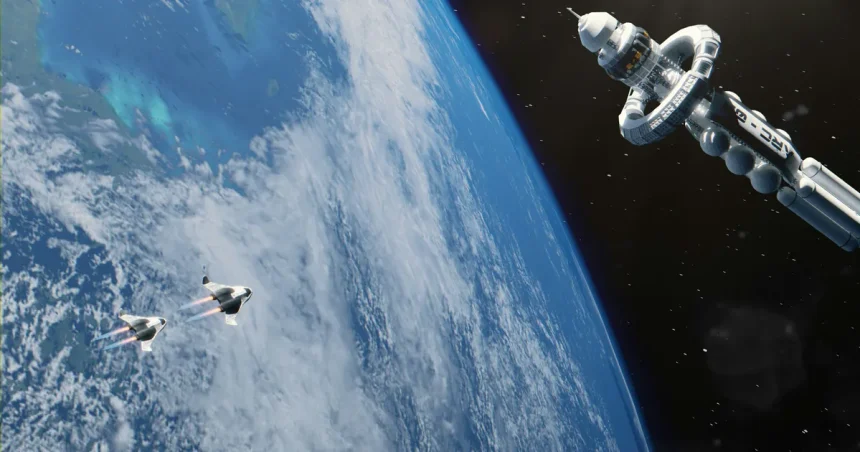
Scientific breakthroughs are rapidly transforming the landscape of future space exploration missions, promising to overcome limitations and open new frontiers for humanity’s reach beyond Earth. From advanced propulsion systems to in-situ resource utilization (ISRU), these innovations are not merely incremental improvements but represent paradigm shifts in how we conceptualize and execute space travel. These advances pave the way for longer duration missions, more efficient travel, and the establishment of a sustainable presence on other celestial bodies. As we look toward 2026 and beyond, the integration of these cutting-edge technologies is poised to redefine what is achievable in space exploration, promising a new era of discovery and expansion.
Advanced Propulsion Systems
Traditional chemical rockets have inherent limitations in terms of efficiency and achievable velocity, particularly for deep-space missions. Next-generation propulsion systems are essential for significantly reducing travel times and increasing payload capacity. Ion drives, for example, employ электроstatic fields to accelerate ions, achieving extremely high exhaust velocities and enabling prolonged, fuel-efficient thrust. These systems, while providing low thrust, can steadily accelerate a spacecraft over months or years, ultimately reaching velocities far exceeding those of chemical rockets. Ongoing research focuses on increasing the thrust and power efficiency of ion drives for future interplanetary missions.
Another promising avenue is the development of nuclear propulsion systems, including nuclear thermal propulsion (NTP) and nuclear electric propulsion (NEP). NTP uses a nuclear reactor to heat a propellant, generating high-thrust exhaust. NEP, conversely, uses a reactor to generate electricity, which then powers electric thrusters. These systems offer significant performance advantages over chemical rockets, allowing for faster transits to Mars and other destinations, potentially reducing radiation exposure for astronauts during long-duration flights. Though facing regulatory and public acceptance challenges, nuclear propulsion remains a key area of research for enabling ambitious missions in the decades to come. In 2026, expect to see more development around this critical area.
Fusion Propulsion Possibilities
Fusion propulsion represents the “holy grail” of space propulsion, promising unparalleled performance capabilities. If successful, fusion rockets could drastically reduce interplanetary travel times. While still in the early stages of research and development, pulsed fusion propulsion concepts are being explored via simulation and experimental devices. The technology relies on harnessing the immense energy released from nuclear fusion reactions to generate high-velocity plasma exhaust. Overcoming the technological hurdles of achieving sustained and controlled fusion, especially in the extreme conditions of space, remains a major challenge, but the potential benefits of fusion propulsion are immense, driving continued research investment.
In-Situ Resource Utilization (ISRU)
ISRU focuses on utilizing resources available on other celestial bodies to produce consumables and building materials, reducing the need to transport everything from Earth. Water ice, for example, can be extracted from lunar or Martian soil and electrolyzed to produce breathable oxygen and rocket propellant. Similarly, regolith (surface material) can be used to create habitats and radiation shielding through techniques like additive manufacturing (3D printing). By “living off the land,” ISRU significantly reduces mission costs and increases the long-term sustainability of space exploration.
The development of effective ISRU technologies is crucial for establishing a permanent human presence on the Moon or Mars. NASA’s Artemis program, for instance, relies heavily on ISRU for creating a sustainable lunar base. This includes technologies for extracting water ice, processing regolith, and producing propellant. Challenges remain in scaling up these technologies and operating them reliably in the harsh environments of space. However, successful implementation of ISRU will be transformative, enabling humans to thrive beyond Earth and conduct long-duration exploration without relying on constant resupply from our home planet, ultimately revolutionizing our ability to sustain long term missions.
Artificial Intelligence and Robotics
Artificial intelligence (AI) and advanced robotics are playing an increasingly important role in space exploration, enabling autonomous navigation, scientific data analysis, and robotic assistance for astronauts. AI algorithms can analyze vast amounts of data collected by spacecraft and rovers, identifying patterns and anomalies that would be difficult for humans to detect. Autonomous robots can perform tasks that are too dangerous or time-consuming for astronauts, such as exploring hazardous terrain, constructing habitats, and maintaining equipment.
The integration of AI and robotics is essential for future deep-space missions, where real-time communication with Earth is limited. Autonomous spacecraft can make decisions independently, navigate complex environments, and respond to unexpected events without human intervention. This autonomy is critical for missions to distant destinations like Europa or Titan, where communication delays can be significant. Moreover, robotic systems can augment human capabilities during spacewalks and planetary surface operations, expanding the scope of scientific research and exploration. These advancements are anticipated to further enable ambitious exploration activities in the next few years.
Advanced Materials and Manufacturing
The extreme conditions of space—vacuum, radiation, and temperature extremes—demand materials with exceptional properties. Advanced materials, such as carbon fiber composites, high-strength alloys, and radiation-shielding polymers, are crucial for building lightweight, durable spacecraft and habitats. These materials enable the construction of larger structures in space, reduce launch costs, and provide enhanced protection for astronauts and equipment.
Additive manufacturing (3D printing) is also revolutionizing space exploration by enabling the on-demand production of parts and tools in space. This reduces the need to carry a large inventory of spare parts and allows astronauts to create customized solutions to unforeseen problems. Advances in 3D printing technology are paving the way for building lunar and Martian habitats using locally sourced materials, further enabling sustainable exploration. The combination of advanced materials and manufacturing techniques is fundamentally changing how we design and build spacecraft, habitats, and other infrastructure for space missions.
Biotechnology in Space
Biotechnology holds immense potential for supporting human life in space and enabling long-duration missions. Genetically engineered organisms can produce food, recycle waste, and even manufacture pharmaceuticals in space. Bioregenerative life support systems, which use plants and microorganisms to recycle air and water, are essential for creating closed-loop environments in spacecraft and habitats.
Moreover, biotechnology can play a crucial role in protecting astronauts from the harmful effects of space radiation. Researchers are exploring the use of radiation-resistant microorganisms and engineered proteins to mitigate radiation damage to human cells. Advances in personalized medicine are also allowing for tailoring treatments to individual astronauts based on their genetic makeup, maximizing their health and performance in space. The intersection of biology and engineering is yielding innovative solutions for sustaining human life in the challenging environment of space.
Quantum Technologies
Quantum technologies are poised to revolutionize various aspects of space exploration, including communication, navigation, and sensing. Quantum communication offers the potential for secure and tap-proof communication channels, utilizing principles such as quantum entanglement for data transmission. This improved security is crucial for maintaining the privacy and integrity of sensitive data during space missions.
Quantum sensors, such as atomic clocks and gravimeters, can provide highly accurate measurements of time, gravity, and magnetic fields. These sensors are invaluable for precise navigation and mapping of celestial bodies. Furthermore, quantum computing may be used to solve complex optimization problems related to mission planning, resource allocation, and data analysis. The exploration and leveraging of quantum mechanics offers transformative capabilities in the realm of space endeavor, and the field is being rapidly advanced for practical applicability.
Key Takeaways
- Advanced propulsion systems, like ion drives and nuclear propulsion, are crucial for reducing travel times and increasing payload capacity.
- In-Situ Resource Utilization (ISRU) enables the production of consumables and building materials from resources available on other celestial bodies.
- Artificial Intelligence (AI) and robotics provide autonomous navigation, data analysis, and robotic assistance in space.
- Advanced materials and manufacturing techniques, such as 3D printing, allow for lightweight, durable spacecraft and on-demand part production.
- Biotechnology is being leveraged to produce food, recycle waste, manufacture pharmaceuticals, and protect astronauts from radiation in space.
- Quantum technologies offer the potential for secure communication, precise navigation, and advanced sensing capabilities.
Frequently Asked Questions
What are the biggest challenges in developing advanced propulsion systems?
The biggest challenges include achieving high thrust-to-weight ratios, ensuring long-term reliability, and addressing safety concerns related to handling nuclear materials. Furthermore, the cost of developing and deploying these systems can be substantial, requiring significant investment in research and development.
How does ISRU contribute to the sustainability of space missions?
ISRU reduces the need to transport resources from Earth, decreasing mission costs and making long-duration missions more feasible. By utilizing locally available resources, ISRU enables the establishment of self-sufficient bases on the Moon, Mars, and other celestial bodies.
What are the limitations of current AI and robotics in space exploration?
Current limitations include the difficulty of programming AI systems to handle unforeseen situations, the limited dexterity of robots in complex environments, and the challenges of maintaining and repairing these systems in the harsh conditions of space.
How can advanced materials improve the survivability of spacecraft?
Advanced materials offer enhanced protection against radiation, temperature extremes, and micrometeoroid impacts. They also enable the construction of lighter and stronger spacecraft, reducing launch costs and increasing payload capacity. They are indispensable for surviving the harsh conditions of space.
What ethical considerations should be addressed when using biotechnology in space?
Ethical considerations include the potential impact of genetically engineered organisms on extraterrestrial environments, the risks associated with using biotechnology on human health, and the responsible governance of resource utilization and waste management in space. It’s essential to address these ethical dilemmas before they become a mission-critical variable.
Conclusion
The convergence of these scientific breakthroughs marks an exciting new chapter in space exploration. As we continue to push the boundaries of what is technically and practically possible, we are on the cusp of realizing ambitious missions that were once confined to the realm of science fiction. The technologies outlined above are not merely incremental improvements but represent fundamental shifts in our approach to space travel. As these technologies mature and become more readily accessible, humanity’s future in space will be limited only by our imagination and our collective will to explore the cosmos.